

SENarts Webinar How Art Creates Inclusion and Belonging

Updated: Sep 24
Art can open a door that ordinary classroom tasks sometimes leave closed. A quiet learner may speak through a painted shape. A student who struggles to join group work may find a role in a drama activity. A young person who finds words difficult may show pride, choice, humour, and care through clay, colour, weaving, rhythm, or movement.
That simple truth sits at the centre of the SENarts project.
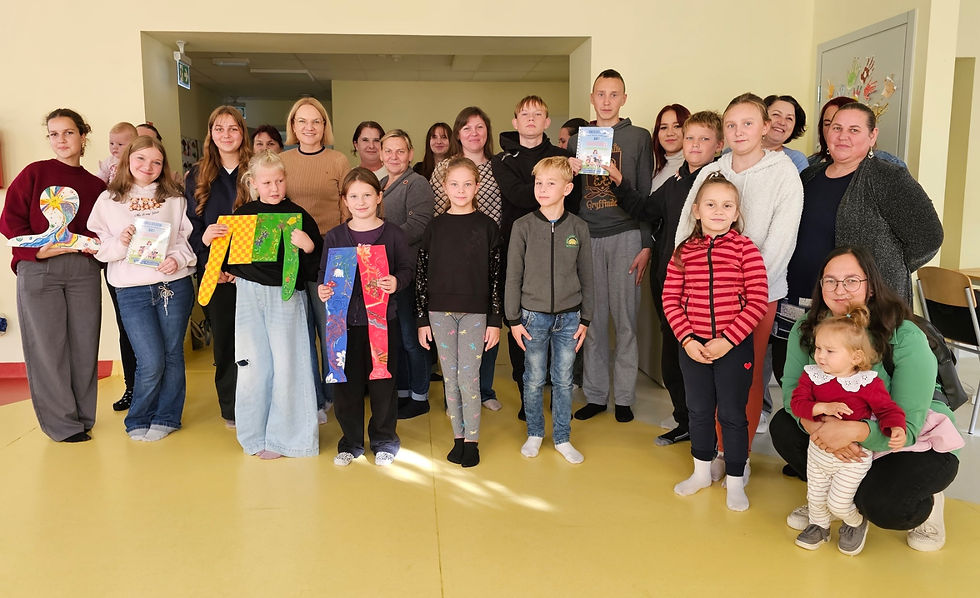
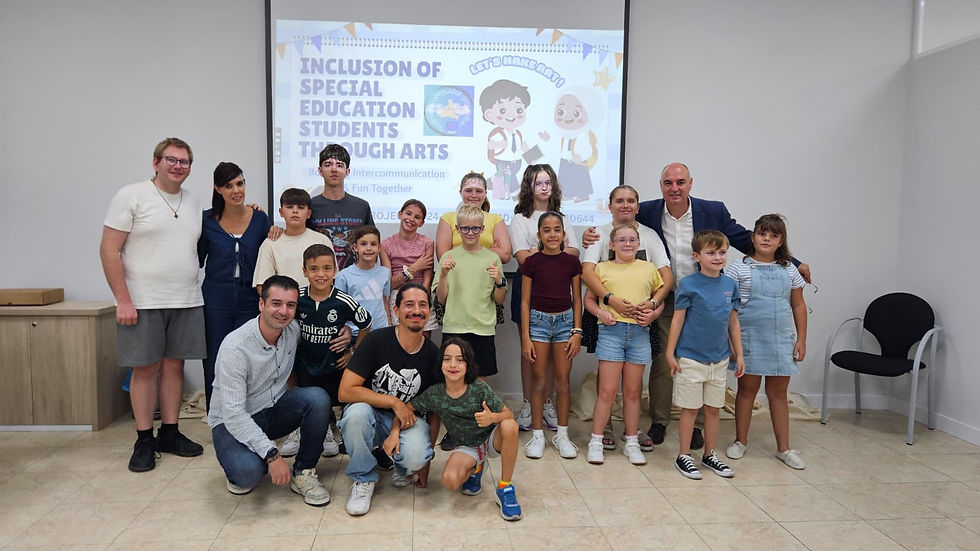
After completing the SENarts Handbook, teachers from three partner schools came together to share what they had learned with a wider audience through an online webinar. The schools involved are Fundación Educativa Corazonista San José in Spain, Münire Bayer Ortaokulu in Türkiye, and Alytaus r. Daugų Vlado Mirono gimnazija in Lithuania.
The SENarts Online Webinar brings together practical classroom experience, creative activities, and real stories of inclusion. It was created to help schools, families, teachers, students, and community organisations see how art can support participation and belonging, especially for young learners with special educational needs.

Why art matters in inclusive education
Inclusion grows when young people feel seen, heard, safe, and useful. Art gives schools a direct way to build those feelings because it does not rely on one single skill. It creates many possible entry points.
Some learners enjoy speaking and acting. Others prefer touch, colour, repetition, music, pattern, or movement. A drawing, a mask, a ceramic object, a piece of marbled paper, or a woven design can become a form of communication. It can say, “This is what I noticed,” “This is how I feel,” or “This is what I made.”
For young people with special educational needs, that flexibility is valuable. Art activities can reduce the pressure to perform in one “correct” way. They can also make room for different speeds, strengths, interests, and forms of expression.
Across the SENarts project, teachers observed how creative work supported:
Communication
Students could share ideas through gesture, image, movement, sound, and materials, not only through spoken or written language.
Self-expression
Learners had space to make choices and show personal identity through colour, shape, role-play, texture, and design.
Confidence
Completing a creative task gave students something visible to be proud of.
Empathy
Group activities helped learners notice the work, emotions, and efforts of others.
Cooperation
Drama, crafts, and shared art tasks encouraged students to take turns, listen, help, and build something together.
Participation
Art made it easier for every learner to have a role, even when needs, abilities, or communication styles differed.
This is why the webinar focuses on creativity as a practical tool. Art is not treated as an extra activity that happens after “real learning”. It becomes a way to reach learners who may otherwise stay at the edge of school life.
Three schools, one shared purpose
The SENarts webinar was created by teachers from Spain, Türkiye, and Lithuania. Each school brought its own culture, experience, and classroom reality. That mixture matters because inclusion does not look exactly the same in every place.
A technique that works well in one school may need changes in another. Materials vary. Time varies. Student groups vary. Traditions and local art forms vary too.
Yet the shared aim stays the same: to help young people participate, create, connect, and belong.
The three partner schools contributed to the project from their own contexts:
Partner school | Country | Contribution to the shared journey |
Fundación Educativa Corazonista San José | Spain | Classroom experience in using creative activities to support expression and participation |
Münire Bayer Ortaokulu | Türkiye | Practice with art forms and group activities that encourage connection and cultural exchange |
Alytaus r. Daugų Vlado Mirono gimnazija | Lithuania | Examples of how creative work can support confidence, cooperation, and belonging |
The webinar builds on this international work. It does not present one fixed model that every school must copy. Instead, it shares ideas that others can adapt.
That approach is important. Real inclusion is local. It happens in a particular classroom, with particular learners, materials, teachers, families, and community links. A marbling activity in Türkiye, a traditional craft activity in Lithuania, or a drama activity in Spain can inspire a school elsewhere to ask, “How could we create something similar with our students?”

The webinar shares activities that schools can adapt
The SENarts project included a wide range of art forms. This variety helped teachers find different ways to involve students and respond to their needs.
The webinar shares examples from activities such as:
drama and role-play
traditional crafts
painting and drawing
marbling
weaving
ceramics
collaborative creative tasks
activities linked to culture, emotion, and communication

Each activity offered more than a finished artwork. The making process mattered just as much.
In drama, students could explore roles, emotions, and social situations in a safe space. A learner did not need to perform perfectly. They could take a small part, use gesture, repeat a line, help with props, or respond to others through movement.
In painting, students could make choices without needing long explanations. Colour, size, pressure, and shape all became forms of expression. A student who found it hard to describe a feeling in words could still show energy, sadness, calm, excitement, or pride on paper.
In marbling, learners could watch colour move and change. The process encourages curiosity because the result is partly planned and partly unexpected. This can help students accept surprise, try again, and enjoy experimentation.
In weaving, repetition and pattern can create a steady rhythm. Some learners find comfort in repeated actions, especially when they can see the result grow step by step. Weaving can also support fine motor skills, attention, patience, and choice-making.
In ceramics, touch becomes central. Clay can be squeezed, rolled, shaped, pressed, smoothed, and changed. For some students, this sensory experience can be deeply engaging. It also allows mistakes to become part of the process because clay can be reshaped.
Traditional crafts brought culture into the classroom. They helped students connect personal creativity with shared heritage. This can be especially powerful in international projects because learners see that every community has artistic knowledge worth sharing.
The strongest activities were often the ones with flexible roles. A group task might include students who cut materials, choose colours, shape objects, tell a story, arrange a display, or support a peer. When the task has many ways to contribute, more learners can take part with dignity.
Real stories make the learning visible
One of the most meaningful parts of the webinar is its focus on real-life examples and individual student journeys. These stories show what inclusion can look like in practice.
The examples are shared with care and respect. They focus on growth, participation, and learning rather than labels. They help viewers understand how a creative activity can support a young person beyond the artwork itself.
A student who rarely speaks in a large group may begin by choosing colours beside a peer. Over time, that choice can become a short comment, a shared smile, or a question. The art activity gives communication a reason and a setting.
Another student may find social interaction difficult. In a drama or craft group, they can practise turn-taking through a clear shared task. They do not have to start with abstract rules about cooperation. They can pass a material, wait for a cue, copy a movement, or help complete a scene.
A learner with low confidence may discover that the finished artwork gives them something to show. Praise becomes connected to effort and creation. The student can point to something real and say, “I made this.”
A young person who struggles to name emotions may find that images, masks, colours, music, or movement make those feelings easier to explore. Art can create a gentle distance. The learner can talk about a character, shape, or object first, which may feel safer than speaking directly about themselves.
These changes may seem small from the outside. In a school community, they matter. Confidence often grows through repeated small moments. Belonging develops when students experience, again and again, that their presence adds something valuable.
Art can bring young people into shared activity without asking them all to communicate, move, think, or respond in the same way.
That is one of the clearest messages of the SENarts webinar. Inclusion becomes visible through participation, not only through policy or intention.

What teachers and communities can take from SENarts
The SENarts webinar is useful because it moves from ideas to examples. It shows that inclusive art does not need to begin with expensive materials or perfect conditions. It begins with thoughtful planning and respect for learners.
Schools and community groups can take several lessons from the project.
Start with access, not the final product
The aim is not to produce identical artworks. The aim is to make sure every young person can enter the activity in a meaningful way.
That may mean offering different tools, larger materials, visual instructions, peer support, extra time, sensory choices, or quieter spaces. It may also mean accepting different forms of participation.
One student may paint. Another may choose colours. Another may describe the image. Another may help arrange the display. Each role can be valuable.
Build activities with choice
Choice supports ownership. Even small choices can matter, such as selecting a colour, texture, role, movement, or pattern.
For some learners, too many choices can feel overwhelming. In that case, teachers can offer two or three clear options. The goal is to give real agency while keeping the activity manageable.

Use repetition and routine
Creative work can be exciting, but it can also feel uncertain. Predictable steps help learners feel safe.
A simple routine might include:
looking at an example
choosing materials
trying a technique
sharing progress
reflecting on the result
When students know the structure, they can focus more on expression and less on anxiety.
Make cooperation concrete
Telling students to “work together” can be too vague. Art makes cooperation visible.
A pair can build one clay object. A group can create a shared mural. Students can add pieces to a collective weaving. A drama scene can only work if each person responds to others.
These tasks help students practise social skills through action.
Reflect with more than words
Reflection does not always need a written paragraph or spoken answer. Learners can point to a favourite part, choose an emotion card, show a gesture, take a photo of their work, or place their piece in a group display.
This respects different communication styles and keeps reflection inclusive.
The handbook and webinar work together
The SENarts Handbook gathered the learning from the project into a resource that others can use. The webinar takes that learning further by adding voice, explanation, examples, and lived classroom experience.
Together, they help turn project results into shared practice.
A handbook can give structure. A webinar can show the human side. When teachers describe what they tried, what worked, what changed, and what students gained, the ideas become easier to imagine in another school.
This is part of the wider purpose of dissemination. The project does not end when the activities end. Its value grows when other people take the ideas, adapt them, and create new inclusive experiences in their own settings.
That may happen in a school art room, a language class, a special education support group, a community youth centre, a family workshop, or an international partnership. The setting can change. The principle stays clear: creativity can help people meet each other.

A shared invitation to keep creating inclusion
The SENarts webinar carries a simple invitation. Take what is useful. Adapt it. Try it with care. Let students surprise you.
For teachers, it may offer a new way to plan inclusive lessons. For families, it may show how creative activities can support confidence and emotional expression at home. For community organisations, it may suggest ways to bring young people together through shared making. For students, it may open another path to friendship, participation, and pride.
The project also reminds us that inclusion is built through repeated opportunities. A single activity can create a moment of connection. A series of activities can create trust. A school culture that values creativity can help more young people feel they belong.
The teachers from Spain, Türkiye, and Lithuania created this webinar to share what they learned beyond their own classrooms. Their message is generous and practical: art gives us tools to communicate, cooperate, and recognise the value of every learner.
Watch the webinar here: SENarts Online Webinar.
Art can bring people together. Inclusion makes sure every person has a place in the making.

Thank you for sharing!