


About Us
The Full Story
The project “Inclusion of Special Education Students through Arts” aims to promote an inclusive educational environment where all students, regardless of their abilities or learning differences, can express themselves, build confidence, and develop social connections through creative activities. Art serves as a universal language that transcends barriers, allowing students with special educational needs to participate meaningfully in shared learning experiences.
By integrating visual arts, music, drama, and movement into the school curriculum, this project encourages collaboration, empathy, and mutual understanding among students. It recognizes the arts as a powerful tool for personal growth, emotional expression, and community building, while also supporting the development of fine motor skills, communication, and creativity.
Our Objectives
-
To foster an inclusive and supportive school environment where all students can participate in artistic and cultural activities.
-
To use the arts as a means to enhance social interaction, self-expression, and emotional well-being among students with special educational needs.
-
To encourage collaboration and empathy between students with and without disabilities through shared artistic projects.
-
To promote awareness and appreciation of diversity and individual talents within the school community.
-
To integrate inclusive art practices into the school’s educational and extracurricular programs.
Our Team
Fundacion Educativa Corazonista San Jose en Fuensalida
The Congregation of the Sisters of Charity of the Sacred Heart of Jesus wants to respond to one of the primary rights of man: the right to education.
Our proposal is a Catholic school that we offer to families who want a Christian education for their children.
A center open to all. "Parents are the first and foremost responsible for the education of their children. They therefore have the preferential right to choose the type of education and school they want for their children."
And that therefore opens itself to all social classes, excludes any discrimination and welcomes those who want the education it provides.
Within this position, our preferences are oriented towards those most in need.
The San José school is a Catholic center, integrated into the universal mission of the Church; He adheres fully to his magisterium and pastoral directives.
Through its educational action and to the extent of its possibilities:
-
It evangelizes through education, with a pedagogy of personal and preventive style, full of love and respect.
-
It promotes the integral formation of students in accordance with a Christian conception of man, life and the world, embracing all dimensions of the person and committing the harmonious development of all his faculties.
-
It educates from evangelical values for a committed faith. It wants to make an environment of dialogue, in which the concerns and approaches of our culture are collected, the answers of faith are offered with honesty and rigor, and people are helped to mature by overcoming the academic relationship alone.
-
It proclaims and forms in the knowledge and love of Jesus Christ and his message. It does not impose it, but it does take the responsibility of giving the opportunity and the means to know it.
-
It stimulates and fosters knowledge and love for Mary, Mother of Jesus.
-
It promotes responsible collaboration and solidarity with those values that make our society more humane and more just.
-
It teaches religious education, through the subject of Religion, a subject that includes within school hours. It complements the pastoral education with activities of free choice, including prayer and the practice of the sacraments.
-
It wishes to achieve an Educational Community that shares the faith and the educational mission in a family spirit, in a climate of joy, simplicity and freedom and of invitation to creativity and dedication to daily work.
Munire Bayer Ortaokulu
The school has now been rebuilt and calls itself Munire Bayer Ortaokulu but the original school was called Ali Riza Çevik Primary School. The foundation of Ali Riza Çevik Primary School was laid on September 8, 1945.The construction was completed on April 15, 1946 with the valuable work of the Governor of Manisa, Mr. Ali Riza Çevik and the commission members Sabri AYSAL, Mehmet TEMİZ, Hulusi CAN, Sait DİNÇ and Şinasi AĞAR. The entire school was built with the support of the public and cost 66000 TL. Education and training began at the school on April 23, 1946.
Our school, which was built as a 6-classroom school, could not meet the needs of the environment and it was decided to build the 2st additional building by adding another floor (A Block 1nd floor) on top of the existing structure (B Block). An additional building with 30 classrooms, the foundation of which was laid on August 1961, 12. It was opened with a ceremony on September 17, 1962 and started teaching. The building was built with the donations of cotton farmers for 1 cent per kilo. The building, which cost 130.000 TL, was named "PAMUKÇULAR PRIMARY SCHOOL".
Our old buildings, which were built in the garden of our school in 1946 and used as toilets and storages, could not respond to the increasing number of students in our school. In particular, our school, which consists of two two-storey buildings, has become unable to accept 1600 students despite dual education.3. The annex building (C Block) was completed in 1982 and opened for education in the 1983-1984 academic year.
The neighborhood where our school is located is Mimar Sinan Neighborhood. This neighborhood used to be called Sultan Neighborhood. The place where our school was and the park was the great cemetery. During the Republican period, the cemetery in the middle of the city was removed and a school and park were built instead. In this way, the neighborhood began to be beautified every year.In 1945, the name of the famous Turkish architect Mimar Sinan was given to the neighborhood where the school was located.
Since its establishment, our school has always had a respected place in Manisa. This reputation and the successes that come with it stem from the selfless work of the teachers and administrators of our school.
Alytaus r. Daugu Vlado Mirono gimnazija
It is difficult to establish when the first school was started as there are no precise sources. The habilitated doctor of humanities sciences Algimantas Miškinis provided the following facts: "The parish school was mentioned in 1777 attended by 12 children at that time." The number of students grew every year reaching 30 in the beginning of the 20th century. There were 3 sections (forms). Under the tsar's authorities Russification conditions in Lithuania at that time, the school subjects (arithmetic, handwriting and religion subject) were taught in Russian. The students had to study Russian as well.
After Lithuania got its independence in 1918, educational matters became of great importance. From 1923 to 1944 there was only elementary school, in the year 1940 having 6 sections (forms) already. Then it was reorganized into the progymnasium, and in 1947, the gymnasium was established. In the year 1949, the school got the secondary school status.
On March 29, 2007 Daugai secondary school was named as Vladas Mironas secondary school, after the name of the signatory of the Act of Independence of Lithuania. Then, on February 10, 2011, our school got gymnasium status.
Our school has been promoted by the famous people: the poets Onė Baliukone, Dainius Gintalas, the Doctor of biological sciences Juozas Vasiliauskas (he has written some books on medicinal plants usage). Antanas Smolskus, the professor of Academy of Music, made "birbynė" (a Lithuanian aerophone ) known in the whole world. The well-known people to be mentioned as the students of our school: Juozas Listavičius, the former Lithuanian Parliament member, the doctor of Social and Economic Sciences; the Chancellor Rokas Puzonas, the actor and director Valdas Babaliauskas, the engineer, inventor, aerobatic pilot Vladas Palubinskas, the professor of Vilnius Gediminas Technical University Kazys Petkevičius and many other people.
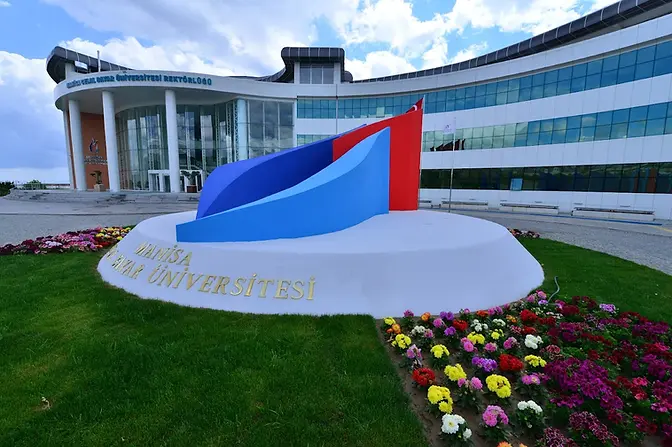
Celal Bayar University: Faculty of Fine Arts, Design and Architecture
In 2017, the Department of Music, which was established within the Faculty of Fine Arts, Design and Architecture of Manisa Celal Bayar University, started to provide undergraduate education in the 2018-2019 academic year. The Department of Music, which provides education at the formal education level, consists of the main branches of Turkish Music, Musicology and Music Technology, and active education and training continues in the main branch of Turkish Music. Our Mission; In order to contribute to the cultural change and development of the society, to raise the aesthetic values of the society, to educate highly qualified individuals in the fields of Turkish Music, Musicology and Music Technology and to carry out national / international scientific and artistic activities is the mission of our department.
In our department, which started education in 2019, 2 students with asperger autism, 1 student with asperger and visual impairment at the same time were educated and this student graduated as the 2nd in the Faculty with his success. Our special education programme for students with disabilities has been awarded with the ‘barrier-free programme award’ by the Council of Higher Education (YÖK). Implementation of exams one-to-one in separate classes under the supervision and support of a proctor, permission to enter the lessons with a shadow teacher, supply of relief sheet music for our visually impaired student, barrier-free music education workshop and in-service training practices for the instructors of the
department have brought this award to our department.
The profiles of the students studying at our faculty are as follows:
Age range: 18-24
They have Musical Talent: Students have basic musical skills such as voice colour, tone and breath control. They have the ability to project emotion when singing or playing an instrument. Theoretical Knowledge: They have knowledge in subjects such as music theory, harmony and solfege. This knowledge enables them to understand music more deeply. They have the opportunity for practical experience: Students have the ability to play various instruments and learn these instruments practically. They also gain stage performance experience. They have an Artistic Perspective: Music students consider music not only as a performing art, but also as a science and a form of cultural expression. They have creativity and expression skills: Students are encouraged to compose their own compositions and develop their musical expression. This enhances their creativity and artistic expression.


Let’s Work Together
Get in touch so we can start working together.


