

SENarts Handbook Inspiring Inclusion Through Creative Arts

Art can make room for a voice before a young person finds the words to speak. A mask, a rhythm, a piece of fabric, a shared drawing, or a short drama activity can open a door that ordinary classroom routines may leave closed.
That idea sits at the heart of the completed SENarts Handbook, a resource created from a journey of creativity, cultural exchange, inclusion, and learning. The handbook brings together activities, workshops, methods, and reflections developed throughout the SENarts project. Its purpose is simple and powerful: to show how creative arts can help build places where every young person can participate, contribute, and feel they belong.
The handbook has been created with schools, teachers, students, families, and community groups in mind. It is especially meaningful for young learners who may have special educational needs or who need extra support to take part fully in learning and community life.

The handbook grew from shared creative experiences
The SENarts Handbook is not a theory document written from a distance. It grew from practical experiences with young people, educators, and communities. Across the project, participants explored how art can support inclusion through hands-on activities, shared cultural expression, and creative collaboration.
The result is a handbook that gathers:
Art activities that can be adapted for different learners
Workshop ideas for schools and community settings
Creative approaches using drama, crafts, and traditional arts
Reflections from the project journey
Examples of how inclusion can happen through making, playing, and sharing
This matters because inclusion does not happen only through policies or good intentions. It happens in daily moments. A learner is invited to choose a colour. A student who rarely speaks takes a role in a drama scene. A group discovers a traditional craft from another culture. A young person sees their idea valued by others.
These moments may look small, but they can change how a learner sees themselves. They can also change how a group sees each other.
The handbook offers a starting point for creating those moments more often. It gives educators and community leaders ideas they can take, adapt, simplify, extend, and make their own.
Art gives young people more than a finished piece
Creative activities often end with something visible: a drawing, a performance, a handmade object, a story, a song, or a display. Yet the deeper value often lives in the process.
When young people create together, they practise skills that reach far beyond the art activity itself.
They build confidence by trying something new and seeing that their contribution matters. They practise communication by making choices, explaining ideas, listening to others, and responding through words, movement, gesture, or images. They develop social skills by working in pairs or groups, waiting, sharing materials, and solving small problems together.
For some learners, this kind of participation can feel safer than traditional forms of classroom communication. A student may find it easier to express emotion through colour than through speech. Another may connect with others through movement, rhythm, or role play. Another may feel proud when a craft skill becomes a way to help a peer.
The handbook recognises these different pathways. It shows that expression does not have to look the same for everyone.
Inclusion grows when young people are offered more than one way to take part.
That is one of the strongest messages behind the SENarts project. Creative arts can lower barriers because they allow for many forms of participation. A learner can lead, observe, assist, perform, design, choose, repeat, imagine, or simply try.
Each role has value.
Traditional arts and cultural expression bring communities closer
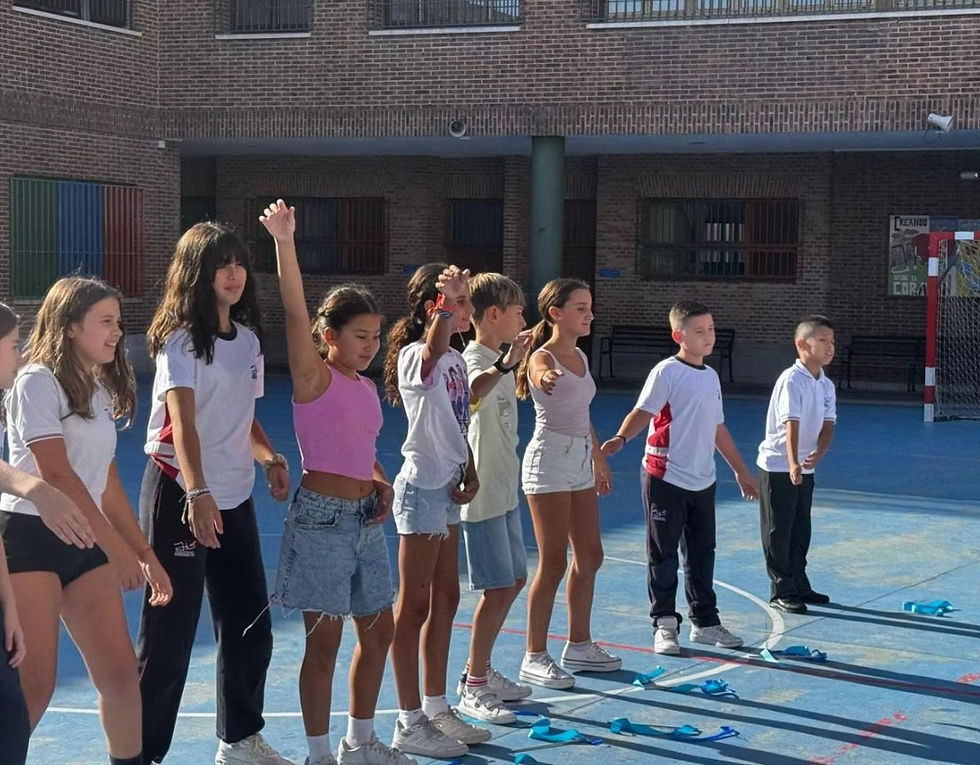
One important part of the SENarts journey has been cultural exchange. Through traditional arts, crafts, drama, and shared creative practices, young people had opportunities to discover cultures other than their own and to reflect on their own identity.
This kind of learning can be gentle but meaningful. A traditional pattern can lead to a conversation about family, place, memory, or celebration. A drama game can help learners explore different viewpoints. A craft activity can show that cultures hold knowledge, beauty, and skill in everyday objects.
For young people, especially those who may sometimes feel separate from the wider group, cultural expression can help build connection. It can say, “My story belongs here too.”
The handbook encourages activities that help learners:
Discover and appreciate different cultures
Share personal and community traditions
Express emotions in creative ways
Understand others through role play and storytelling
Take pride in their own ideas and strengths
This approach supports inclusion because it values difference rather than hiding it. It gives space for each learner to bring something of themselves into the activity.
A classroom or community group does not need expensive materials to begin. Many meaningful activities can use simple items such as paper, fabric, recycled materials, natural objects, music, movement, and spoken stories. What matters most is the approach: open, respectful, flexible, and welcoming.
The handbook’s ideas can be adapted for different ages, group sizes, abilities, settings, and available resources. A drama workshop can become a short movement game. A detailed craft can be simplified into a sensory exploration of texture and colour. A cultural activity can begin with one object, one image, or one story.
Good inclusive art practice asks, “How can everyone take part in a way that works for them?”
Inclusive activities need thoughtful facilitation
Creative freedom works best when it is held by clear, kind structure. The SENarts Handbook can inspire many activities, but the way these activities are facilitated matters as much as the activity itself.
Inclusive creative work does not mean giving every learner exactly the same task in exactly the same way. It means creating fair opportunities for participation. Sometimes that means offering choices. Sometimes it means using visual instructions. Sometimes it means allowing extra time, pairing learners thoughtfully, or accepting different kinds of outcomes.
A learner who creates a small mark on a shared artwork has contributed. A student who communicates through gesture during a drama activity has participated. A young person who watches first and joins later may be building the confidence they need.
The aim is not perfection. The aim is belonging.
Useful inclusive choices can include:
Offering different materials with varied textures, colours, and sizes
Giving instructions through words, images, and demonstration
Allowing learners to work alone, in pairs, or in small groups
Building in quiet moments for reflection
Celebrating process as well as finished work
Avoiding comparison between learners’ creative outcomes
Making roles flexible so every participant can contribute
These choices can help young people feel safer and more willing to try. They also support educators and facilitators by making activities easier to adapt in real time.
In practice, a craft workshop might include pre-cut shapes for learners who need fine motor support, open materials for those who want to design freely, and a shared group piece where every contribution becomes part of something larger. A drama session might include spoken roles, movement roles, sound effects, and silent characters so learners can choose a form of participation that feels possible.
This is where art becomes a tool for inclusion rather than just an activity on a timetable.

The handbook is a starting point for new ideas
The completion of the SENarts Handbook marks an important point in the project, but it is not an ending. Its real value begins when schools, families, and community groups use it, adapt it, and build from it.
Every learning setting is different. Each group has its own needs, cultures, languages, strengths, and challenges. That is why the handbook should not be treated as a fixed script. It is an invitation.
Take one activity and make it simpler. Combine two ideas. Use local traditions. Invite families to share materials or stories. Connect a craft activity to a festival, a classroom theme, or a community celebration. Turn a drama exercise into a confidence-building warm-up. Use collaborative art to welcome new students or strengthen a group.
The most inclusive activities often grow from small changes:
A choice between drawing or collage
A quiet corner for learners who need a pause
A shared artwork where no single piece has to stand alone
A sensory version of a traditional craft
A group reflection using images instead of only spoken answers
These changes can help more young people feel that there is a place for them.
The handbook also reminds us that inclusion is not only about supporting learners with special educational needs. It benefits the whole group. When activities are flexible, creative, and respectful, everyone gains more ways to communicate and connect. Learners become more aware of each other. They practise patience, empathy, and cooperation. They learn that difference can be part of the group’s strength.
That is the kind of learning that stays with young people.
Creating together helps everyone belong
The SENarts project has shown how traditional arts, drama, crafts, cultural expression, and collaborative creativity can support young people in many ways. They can build self-confidence. They can develop communication and social skills. They can express emotions and understand others. They can discover cultures, explore strengths, and feel valued in school and community life.
For young learners who need additional support, this can be especially powerful. With the right activities and an inclusive approach, everyone can contribute. Everyone can create. Everyone can communicate in some way. Everyone can shine.

The next step is to put these ideas into motion. Explore the activities, adapt them to your setting, and use them to create new inclusive experiences in schools and communities.
Because when we create together, everyone has a place.

Comments