

SENarts in Daugai: Creative Arts for Inclusive Education

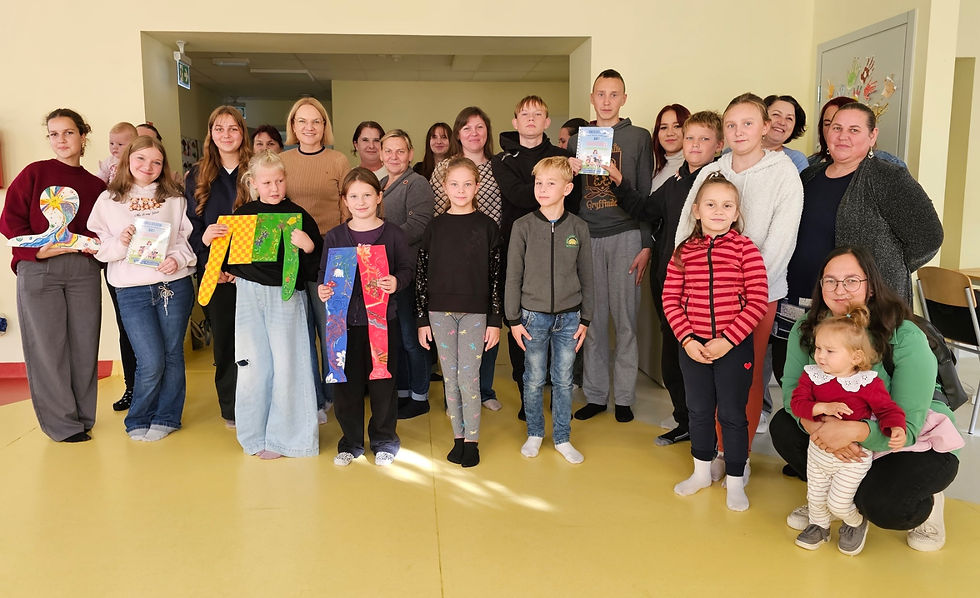
Inclusive education becomes easier to understand when people can see, hear, and feel it in action. That was the spirit in Daugai on Thursday, 8 October, when the Lithuanian team from Alytaus r. Daugų Vlado Mirono gimnazija welcomed educators, families, and local community members to the Daugai Community Center for a SENarts dissemination event.
The gathering marked an important moment for the project. It was a chance to share what SENarts has built, reflect on the role of the arts in inclusive classrooms, and introduce the newly released SENarts E-Handbook. More than a project update, the event became a shared conversation about how music, dance, visual arts, and theatre can help every child feel recognised and supported at school.
A community event rooted in inclusion
The Daugai event brought together people who all play a part in a child’s learning journey. Teachers came with classroom questions. Families came with lived experience. Community members came with curiosity and support.
That mix matters. Inclusive education is not only a policy or a method used inside school walls. It grows stronger when a whole community understands why belonging matters.
During the event, the Lithuanian team shared the journey of the SENarts project and presented key outcomes from its work. The focus was clear: creative arts can open routes into learning that traditional tasks sometimes cannot.
For some children, speaking in front of others may feel difficult, but moving, drawing, or joining a rhythm can feel safer. For others, drama can help practise social situations, while visual arts can offer a calm way to express feelings and ideas. These methods do not replace good teaching. They add more doors into participation.
The event also gave participants a first look at the SENarts E-Handbook, a practical resource designed to support teachers and learning communities that want to bring inclusive arts methods into their work.
Why the arts belong in inclusive classrooms
Music, dance, visual arts, and theatre all have something in common. They invite participation in more than one way.
A child can join a rhythm by clapping, tapping, listening, or moving. A student can take part in a drama activity by speaking, miming, choosing a prop, or helping shape a scene. In visual arts, there is room for choice, texture, colour, pace, and personal meaning.
That flexibility is valuable in classrooms where children have different strengths, needs, languages, attention spans, and confidence levels.
Creative activities can support inclusion by helping to:
Lower social barriers Shared art tasks can reduce pressure and make it easier for students to connect.
Build self-confidence Children often gain confidence when they see that their ideas have value.
Support communication The arts allow expression through sound, movement, image, gesture, and role play.
Create shared success A group performance, mural, rhythm circle, or drama scene gives students a common goal.
Make learning visible Creative work can show understanding in ways that tests or written tasks may miss.
These are simple ideas, but they can change the feeling of a classroom. When students have more than one way to take part, more students can belong.

The SENarts E-Handbook offers practical support
One of the main highlights of the Daugai event was the presentation of the newly released SENarts E-Handbook. The handbook gathers the project’s inclusive arts methodology in a format that educators and learning communities can explore and adapt.
A resource like this is useful because many teachers support diverse classrooms every day, yet they may not always have ready-to-use creative methods at hand. The handbook helps bridge that gap. It brings the project’s ideas into a form that can travel beyond one event, one school, or one country.
The team highlighted how the handbook can help educators plan activities that are not limited to one “right” way of participating. That is especially helpful for students with special educational needs, but it also benefits the whole class.
A strong inclusive arts activity often has a few shared features:
It allows choice
It values process
It supports cooperation
It can be adapted
Students can take part through movement, image, sound, words, or observation.
The focus is not only on a polished final result.
Students create with others, not just beside them.
Teachers can adjust pace, materials, space, or roles.
The best inclusive methods are not complicated for the sake of it. They are thoughtful, flexible, and human.
Daugai showed the power of shared commitment
The Daugai Community Center offered more than a venue. It created a space where education, family life, and community values could meet.
That shared setting helped make the message of the project stronger. Inclusion is not something a teacher carries alone. It needs support from schools, families, local organisations, and wider communities.
The Lithuanian team from Alytaus r. Daugų Vlado Mirono gimnazija played a key role in making that connection visible. By welcoming the community into the SENarts story, they helped show that inclusive education is both practical and personal.
For families, the event offered a chance to see how creative methods can support children with different learning needs. For educators, it gave fresh ideas and a shared language. For the community, it showed how art can bring people together around a common purpose.

Creative inclusion can continue beyond the event
A dissemination event is only one point in a longer journey. Its real value grows when people take the ideas back into classrooms, school activities, family conversations, and community projects.
The SENarts approach invites educators to start with small, workable steps. A music activity does not need a full set of instruments. A drama exercise does not need a stage. A visual arts task does not need expensive materials. What matters is the intention behind the activity: to create space where each learner can participate with dignity.
Teachers might begin with:
a rhythm circle to help a group settle and listen to each other
a drawing activity where students show how a story made them feel
a movement game that lets children respond without needing spoken language
a short role-play to practise empathy and problem-solving
a shared artwork where every contribution becomes part of the final piece
These activities can be adapted for age, ability, energy level, and classroom context. They also remind students that learning is not only about correct answers. It is also about expression, confidence, cooperation, and trust.
When creative methods are used with care, they can help children feel seen before they are asked to perform.
That simple shift can make a real difference.

The Daugai event was a warm reminder that inclusive education is strongest when it is shared. The arts give schools a practical way to welcome different voices, different bodies, different rhythms, and different ways of learning.
A heartfelt thank you goes to everyone in Daugai who joined the event, supported the SENarts journey, and showed interest in bringing creative methodologies into future learning spaces.
To explore the free SENarts E-Handbook, visit the project resources in English at https://canva.link/jf7oyc781fhb0ah or in Lithuanian at https://canva.link/mbmu1aptrr5e3cp.

Comments