

Art, Inclusion, and Connection at Manisa Special Education Center

A sheet of paper, a handful of colours, and a welcoming room can open a door that words sometimes cannot. Today, the team from Münire Bayer Ortaokulu visited the Manisa Special Education Center as part of the SENarts project, and that simple truth guided the whole day.
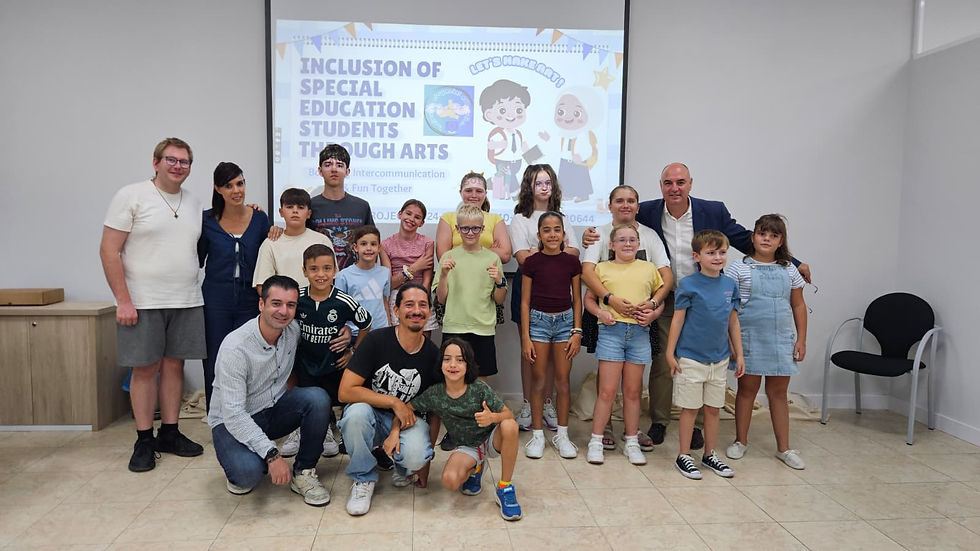
The visit brought together teachers, students, and young learners for a shared creative workshop. It was a chance to exchange experiences, try hands-on activities, and see how art can help children feel seen, included, and connected.
For everyone involved, the day offered more than a project activity. It became a reminder that inclusion grows through small, thoughtful moments: a smile, a shared colour, a choice respected, a child’s work celebrated.

The SENarts project brings inclusion into the classroom
The SENarts project focuses on the link between arts education and inclusive learning. During the visit, this connection came to life in a practical and human way.
Art gives learners more than one way to take part. Some children express ideas through colour. Some respond to rhythm, texture, or shape. Others may need more time, a quieter space, or a different material in their hands. A creative workshop can make room for all of these needs without making any child feel separate from the group.
For students with special educational needs, this matters deeply. Inclusion is not only about being present in the same room. It is about belonging to the activity, having real choices, and feeling that one’s contribution has value.
At Manisa Special Education Center, the workshop encouraged participation through making, observing, touching, choosing, and sharing. The activities created a space where each student could engage at their own pace.
A creative workshop built on care and participation
The workshop was designed as a shared experience rather than a performance. The aim was not to produce perfect artwork. The aim was to help young learners explore materials, make decisions, and enjoy the process.
This kind of creative session works best when it stays flexible. A child may start with one colour and then choose another. A student may prefer collage to drawing. Someone may watch for a while before joining in. Each of these responses can be meaningful.
During the visit, the team from Münire Bayer Ortaokulu shared their own experiences and learned from the atmosphere of the centre. The exchange showed how much educators can gain when they come together around a shared purpose.
The workshop highlighted several simple but powerful ideas:
Choice supports confidence
When children choose colours, shapes, or tools, they practise making decisions in a safe setting.
Art reduces pressure
Creative work allows students to communicate without relying only on spoken language.
Shared activities build connection
Working side by side helps children and adults relate to each other naturally.
Celebration matters
Displaying or acknowledging a child’s work can strengthen their sense of pride.
These ideas may seem small, but in inclusive education they carry real meaning.
The power of art is found in small moments
One of the most memorable parts of the day was the way art helped create connection. In a creative space, communication can happen through gestures, eye contact, movement, colour, and shared attention.
A teacher offering a brush, a student choosing a piece of paper, a group admiring a finished artwork, these moments help build trust. They also remind educators that learning does not always look the same for every child.
Art can give young learners a voice before they are ready, able, or comfortable to use words.
That is why projects like SENarts are valuable. They help schools think beyond standard classroom routines. They invite educators to ask better questions. How can this child take part? What material feels comfortable? What kind of support opens the door instead of closing it?
The visit to Manisa Special Education Center showed that inclusive education needs both planning and warmth. Strong activities matter, but the tone of the room matters too. A calm welcome, patient guidance, and genuine interest in each child can change the whole experience.

Gratitude for a warm and meaningful welcome
The Münire Bayer Ortaokulu team left the visit with gratitude for the staff and students of Manisa Special Education Center. Their warm welcome helped create a day that felt open, sincere, and memorable.
Partnerships between schools and special education centres are essential. They allow teachers to learn from different settings, share practical methods, and build a wider culture of respect. They also remind communities that inclusion belongs to everyone, not only to specialists.
This visit also showed how education through art can support emotional growth as well as learning. When a child creates something and sees others value it, they receive an important message: your ideas matter here.
That message is at the heart of inclusive education.
What this day leaves behind
The visit may have lasted only one day, but its impact reaches further. The workshop strengthened the belief that art can help young learners feel valued, included, and connected. It also encouraged educators to keep building classrooms where every child can participate with dignity.

A big thank you goes to everyone at Manisa Special Education Center for the warm welcome, kind cooperation, and unforgettable shared experience.
The day ended with colour, connection, and a renewed sense of purpose. Through the SENarts project, Münire Bayer Ortaokulu continues to celebrate the power of the arts to bring learners together, one creative moment at a time.

Comments